
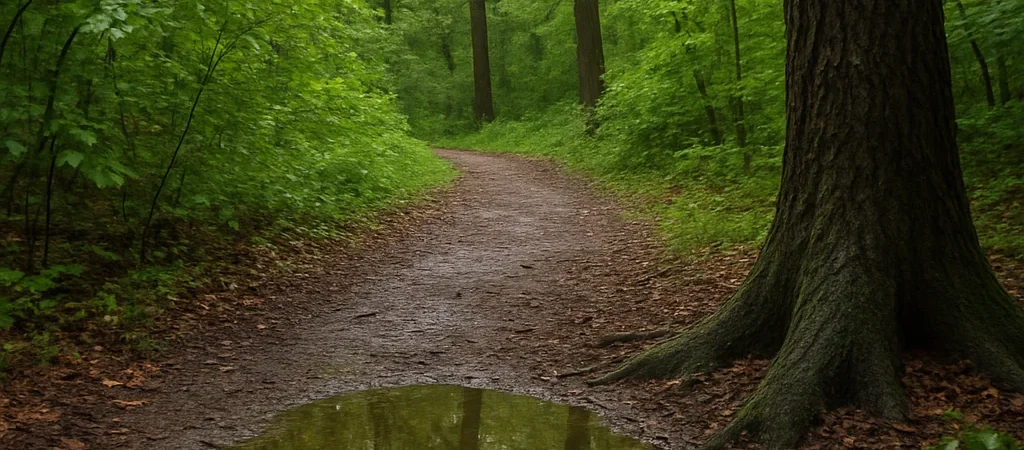
A light shower changes a familiar trail in small, visible ways. The surface of a leaf catches a bead of water; the path darkens; a spider thread shows against the shade for a moment. I try to notice these changes as they happen instead of treating the weather as a reason to postpone the walk.
Watch the surfaces change
Rain makes texture easier to see, but it also changes color and reflection. Bark can look nearly black, while a shallow puddle takes on the pale tone of the sky. I look for details that still read clearly in those conditions—a leaf edge, a rough trunk, or the boundary between water and soil.
Follow the shifting light
When clouds move, a trail may brighten without direct sunlight ever reaching the ground. That brief lift can bring out greens beneath the canopy, then fade again as the next cloud passes. Rather than rushing to make a photograph, I watch one patch of the scene and see how it changes over a few minutes.
Leave room for observation
A field note does not need to turn a shower into a grand event. I might write down where the rain first showed on the leaves, whether the wind moved the upper branches, or which parts of the path stayed dry. Those plain details give a later photograph a useful sense of when and how it was made.